
algol and mira
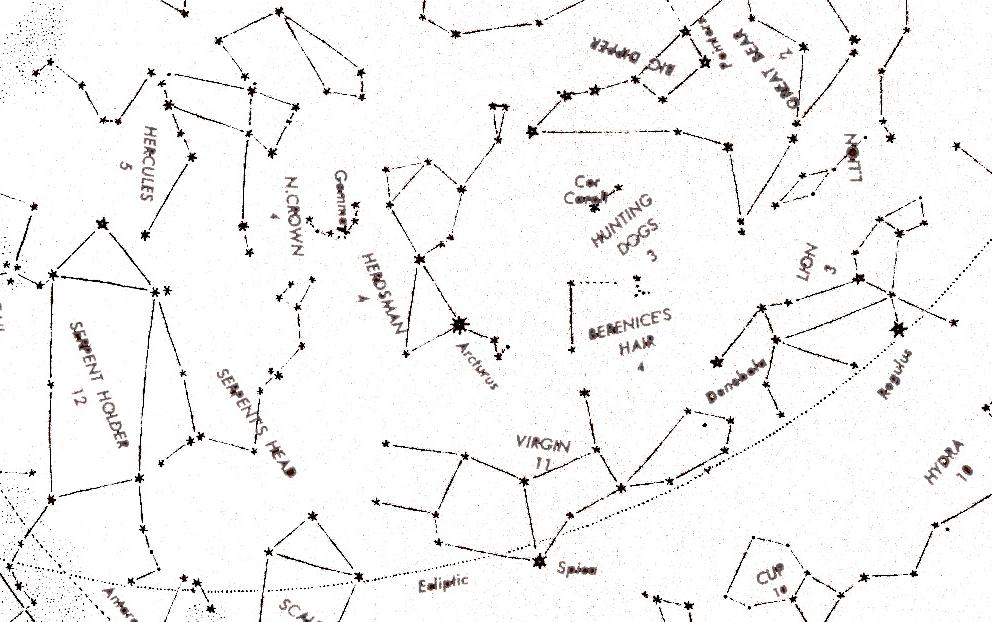
I’ve been halfway back on the astronomy / space exploration kick lately. After stargazing at the beach, and with the recent string of clear nights here, I’ve had to give myself a refresher in constellations (the H. A. Rey diagrams being the only ones acceptable, natch). There were too many regions of the sky I couldn’t “connect the dots” to resemble something I knew. It was distressing, a bit like staring at a picture of a friend and just not being able to remember their name, but having it on the “tip of your brain” the whole time. I’m very eager to have a house with a yard I can pull the telescope out into. It’s been in storage for the past couple of years. Who knows, maybe eventually I’ll get a motorized mount and some photography gear. Then we’ll really be in business.
Regarding the cancellation of the Constellation program, I’m bummed, obviously, and slightly confused to boot. We’re actively surrendering our lead in space exploration to developing nations and stand to lose a great deal of prestige as a country. We’re axing programs that could jump start development of a lot of new technology. And on an emotional note, we’re just losing the vision that made kids (and grownups) excited about exploration, the new, the unknown, the adventure. Sure, it’s expensive, and I know not everyone will go with me, but like the library, the space program is an organization that requires pooled resources, and it’s one I would consider supporting with my tax money. I don’t have any objections to my money going there.
And that kind of touches on what has me a little confused, namely, the President’s redirection of NASA’s resources and focus away from Constellation toward supporting LEO missions and privately-funded, commercial space launch technology. The more “market-based” approach favored by the administration seems to fly in the face of their definite preference for central control and bureaucracy. You’d think they would be in favor of a stronger, more dictatorial NASA, to the detriment of private space ventures, but they’re not. That said, it bears mentioning that there are tenuous parallels between the more decentralized approach favored by the President and the Soviet space program. The Soviet Union’s regime gave it the will to mobilize vast amounts of national resources; it promoted competition between various design firms in hopes a better design would emerge, but failed to realize the amount of focus needed for a moon shot, focus the central command structure of NASA gave the American space program. So I suppose if there’s one thing we can anticipate from Constellation’s demise, it’s a lack of direction in the years to come, direction which is badly needed to maintain our exploratory lead.